



Why your furnace ignitor keeps failing in Delaware

RepairFurnace or heatingDelaware
Step 1 of 2

What ZIP code is the job in?

A furnace ignitor that keeps failing is usually getting too much or too little power, or it's cracked from being handled or jarred during a repair. Most homes in Delaware heat with gas, and the ignitor is a thin strip that glows hot enough to light the burners every single cycle, all winter. That strip is fragile. A furnace short cycling, a clogged flame sensor making the system hunt for ignition, or a draft problem in the vent can all push an ignitor past what it's built to handle, so it wears out in months instead of years. Sometimes the part itself is wrong for the furnace, swapped in as a close-enough replacement that runs hotter or cooler than it should. Either way, replacing the ignitor again without finding why it failed just buys you a few more weeks before it happens again.

  1. Thermostat calls for heat and the furnace starts its cycle.

  2. Inducer motor spins up to clear the heat exchanger first.

  3. Ignitor receives voltage and begins heating up.

  4. Ignitor glows hot enough to light the gas burners.

Why does my furnace ignitor keep burning out?

You've already replaced the ignitor once, maybe twice, and it's not holding. That gets expensive fast, and it eats into the evening when you'd rather not be standing by the furnace with a flashlight. You want to know if there's a reason this keeps happening instead of just being bad luck with a part, and whether it's something a repair visit can actually fix for good.

The power going to the ignitor is wrong, or it's getting handled too much

A new ignitor that fails again within a season almost always points to voltage, not a bad batch of parts. Too much power and the silicon nitride or carbide strip burns through early. Too little and it won't glow hot enough to light the gas, so the furnace tries again and again until the strip gives out. A loose connection at the control board or a failing inducer motor can both cause this. The other common cause is physical: the strip is brittle, and pressing it back into place or bumping it during any furnace work can crack it even when the part looks fine afterward. A repair that checks voltage at the ignitor, not just swaps the part, is what actually stops the pattern.

A smiling man in a dark navy sweater sits on a light sofa in a living room, with a glass bowl of popcorn on a wooden coffee table and bookshelves behind him.
A smiling man in a dark green sweater sits on a tan leather sofa in a dimly lit living room, with a bowl of popcorn in the foreground and a kitchen area blurred behind him.
A smiling middle-aged man in a dark shirt sits on a gray sofa in a living room, with a bowl of popcorn on a side table and shelves, a window and kitchen area behind him.
A smiling bearded man in a dark gray t-shirt sits on a gray couch in a living room, with a large glass bowl of popcorn on a wooden table in the foreground.

What a bad ignitor looks like

A failing ignitor still glows but weaker than it should, sometimes an orange-yellow instead of a bright white-orange. It might take two or three tries before the furnace catches. Pull it and check for a hairline crack along the strip, usually near the middle where it flexes. Silicon nitride and carbide ignitors both fail this way. If the furnace tries to ignite, fails, and locks out after three attempts, that's often the ignitor telling you it's close to done rather than a gas valve or control board problem.


Why voltage is the real culprit

Most ignitors run on 120 volts, and the furnace control board steps that down to whatever the ignitor needs, often around 40 volts for silicon carbide types. If the board is sending more than it should, the ignitor burns out fast, sometimes in a single season. A loose connection or corroded wire can do the opposite, starving it of power so it never gets hot enough and cracks under the strain of repeated cycling. A multimeter check against the manufacturer's spec settles which one is happening.

A woman with dark hair in a bun reclines on a sofa with her eyes closed, wrapped in a cream fleece blanket, a closed blue hardcover book resting in front of her, with a lit lamp and a vase of dried flowers in the background.
A smiling bearded man in a navy sweater sits at a candlelit dinner table with a glass of red wine, a bowl of salad, and plates of food in the foreground.
A gray high-efficiency furnace with two white PVC vent pipes stands against sheet-metal ductwork in an unfinished basement with concrete floor and walls and exposed wood joists.

Finding a pro stops being your job

Describe what your furnace is doing once, in one form.

Send the request today and let a furnace pro reach out to you.

I'm done searching

No charge to send it. You decide if you hire them.

A gray metal furnace with louvered vent panels stands on a concrete basement floor beside galvanized ductwork, gas and plastic pipes, and foil-faced insulation along the ceiling and wall.
Before you get your furnace repair
A basement utility area with a gray furnace, sheet-metal ductwork, pipes, plastic-covered walls, a concrete floor, and a black shelving unit holding storage bins.
After you get your furnace repair
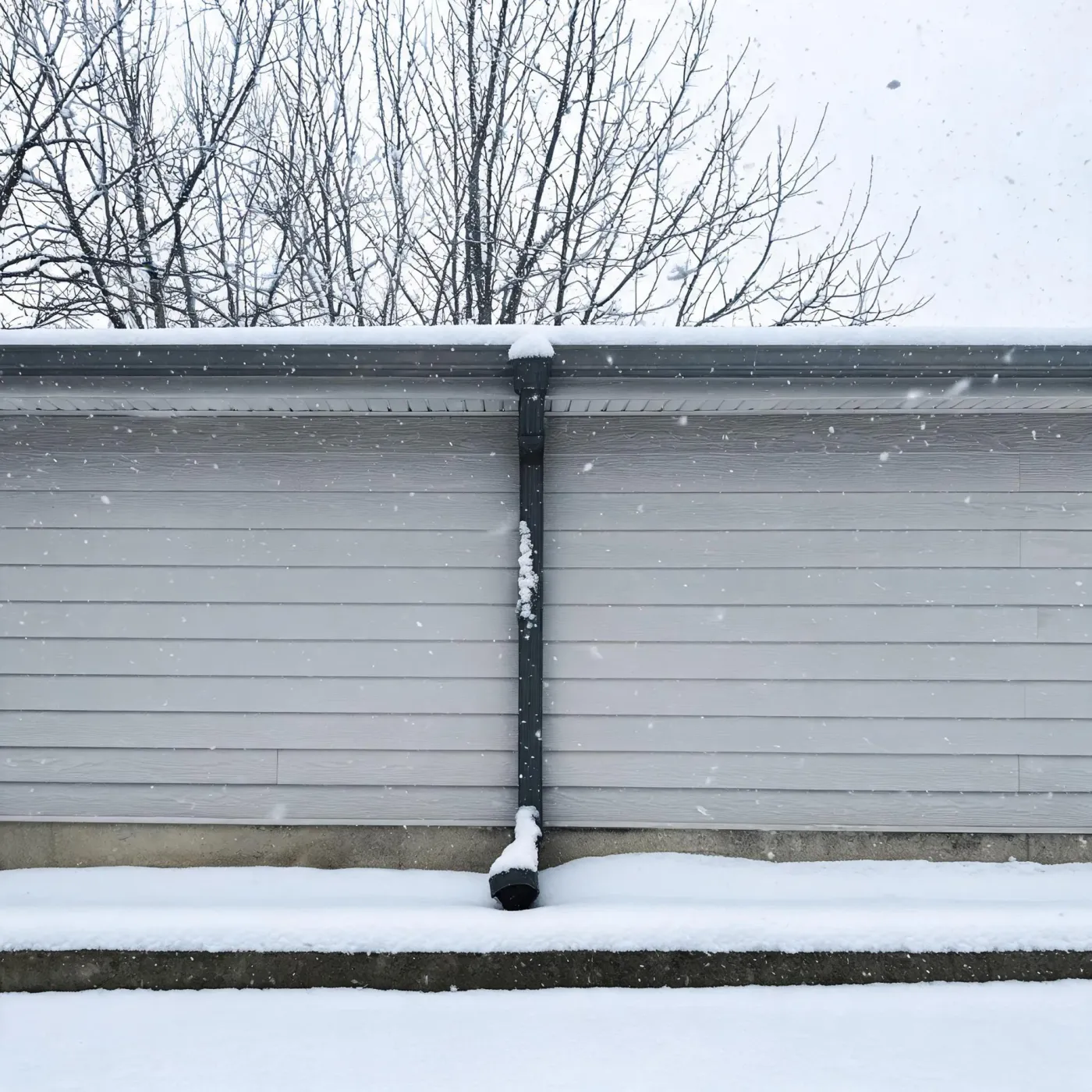
Exterior wall of a building with light gray horizontal siding and a dark downspout running to the ground, with snow on the roofline, steps, and ground, and bare trees behind during falling snow.

Winter nights average 28°F statewide, so your furnace is cycling on through most of the night, not just running once in the evening and shutting off. Each cycle means another jolt of voltage to the ignitor as it heats up to light the burners. An ignitor built for six or eight starts a night is doing it more than that once temperatures sit in the 20s, and the strip wears a little more each time. If yours has already failed once this winter, the cold is part of why. Source: NOAA

NOAA nClimDiv 1991-2020 county normals weighted by homes

Why does your furnace click a few times before it lights?

You hear the furnace try, click, try again, and finally catch on the third attempt. Some nights it doesn't catch at all, and the house starts cooling off while you're asleep. You might notice the burners lighting unevenly, or a burnt smell near the furnace closet the first time it fires after a repair. Each failed attempt is the ignitor drawing power it can't hold, and a strip that's already cracked usually gets worse, not better. Left alone through a cold stretch, you're looking at a furnace that won't start at all on the night you need it most, with the gas burners never lighting.

A gray furnace with white PVC vent pipes stands beside sheet-metal ductwork in a basement with a smooth concrete floor, exposed wood framing, and plastic sheeting on the walls.

Furnace running right

This is what a furnace looks like when the ignitor is doing its job. The gas piping runs clean along the wall, the ductwork sits tight above, and the cabinet is free of rust. One steady glow, one clean light each cycle, all winter.

A beige furnace with two access panels stands against a concrete basement wall, with galvanized sheet-metal ductwork, a white PVC pipe, flexible conduit and insulated ducting around it.

Furnace under strain

Rust along the cabinet and worn piping like this often go along with electrical trouble inside, too. If your ignitor keeps failing, a furnace in this shape is more likely to have a power supply or a draft problem feeding it bad voltage cycle after cycle.

Winter nights average 28°F statewide

At 28°F, your furnace isn't just kicking on for an hour before bed. It's cycling most of the night to hold the house at temperature. Every one of those cycles asks the ignitor to heat up from cold again, and that's the strain that wears one out before its time.

NOAA nClimDiv 1991-2020 county normals weighted by homes

A gas furnace with two gray access panels stands against a plain wall in a basement, connected to sheet-metal ductwork, white PVC vent pipes, and a yellow gas line.

Living with a weak ignitor

Right now you're checking the thermostat before bed instead of trusting it. You hear the click, wait to see if it catches, and sometimes it doesn't. If it fails overnight, the house is cold by morning and you're back to calling around for someone who can look at it, explaining the same thing you explained last time, and hoping this visit holds through the rest of winter.

A gray high-efficiency furnace in a basement corner with white PVC vent pipes, copper and black gas piping, and sheet-metal ductwork beside a plain white wall and wooden stair framing.

What it looks like fixed

A furnace with a sound ignitor lights on the first try, every cycle, without you standing there listening for it. You set the thermostat and leave the room. The repair also means whatever was pushing too much or too little voltage to it gets corrected, so the replacement part isn't set up to fail the same way the last one did.

A closed silver laptop and a ceramic mug of dark coffee sit on a wooden table in front of two chair backs, with a kitchen counter, tiled backsplash, wooden cutting boards, a vase of greenery and a potted plant by a window behind.

An ignitor that keeps failing has a reason behind it

A furnace ignitor that won't hold is telling you something about the power it's getting or a crack that happened when it was last handled. It's not bad luck, and it's not something you did. Delaware winters put that part through a lot of cycles, and a weak one shows itself the same way each time, by catching slow or not catching at all. Once you know what to check and what a contractor needs to find, you know where you stand.

What's left is the part you shouldn't have to do alone at night, cold house or not. Instead of searching through contractors, calling a few, explaining the clicking and the cold mornings all over again, then sitting with quotes trying to compare one against another, you send one form. From there, finding someone to look at it stops being your problem to carry. That's the part that comes off your plate, not the fix itself, but the work of finding who does it.

A gray upholstered sofa with a matching cushion sits beside a potted plant and a wooden table holding a small green plant in a stone pot, near a curtained window.
A dark standing-seam metal roof with a stone chimney and metal cap, seen against a backdrop of autumn-colored forest and layered hills under an overcast sky.

Let someone else find the pro

Hand it over

There's no charge for the request.

A furnace that won't light tonight doesn't wait for a good time to fail. Send the request and skip the part where you call around and explain the clicking and the cold house twice over. Someone who works on furnaces in Delaware takes it from here.