Why your house is dry with the heat on in Delaware
Send the form, and lining up the furnace tune-up stops being yours to chase.
Your furnace runs most of the day right now, and the air in your house feels thinner for it. Furnaces heat air without adding any moisture back to it, and the dry outside air that gets pulled in and heated only gets drier as it warms. That's why your skin feels tight, your sinuses feel raw, and you're seeing static shocks off the doorknob. Nothing is broken. This is what gas heat does in Delaware in the winter.
A furnace that's been cleaned and checked still dries the air out, but it does its job without making the problem worse. A clogged filter or a cracked heat exchanger forces the system to run longer to hit the same temperature, which means more hours of dry air moving through your house, and in a state where electric rates run high, that extra runtime shows up on your bill whether you notice the dryness or not.
If you want someone to look at it, you don't have to start calling around. Send the request and it goes to one contractor, local to Delaware, who works on furnaces like yours all winter and knows which parts tend to fail first in homes here. You won't get a string of calls from companies you've never heard of. Just the one, already pointed at your problem.
From there, finding help stops being something you have to manage. You sent the request. Someone local takes it from here.
Why does my house feel so dry when the furnace is running?
You keep the thermostat up through the winter and the furnace barely shuts off, so your skin cracks, your sinuses feel raw by morning, and the wood floors in your Delaware house start to show gaps at the seams. You want to know why heating the air does this, and whether it's something to live with until spring.
Your furnace is heating the same dry winter air over and over, not pulling in any new moisture
Cold air outside already holds very little moisture, and once your furnace heats it, the relative humidity drops even further. Nothing about a furnace adds water back in. It just moves that same dry air through your ducts, warms it, and sends it into every room. Run it for hours at a stretch on a January night and the air inside can end up drier than a desert. That's what's behind the static shocks, the cracked lips, and the furniture joints loosening up. A whole-house humidifier tied into your furnace puts moisture back into the air as it circulates, instead of leaving you to fight it room by room with a portable unit. It's a setup a technician can check during a maintenance visit, along with the rest of the system.
Furnace running clean
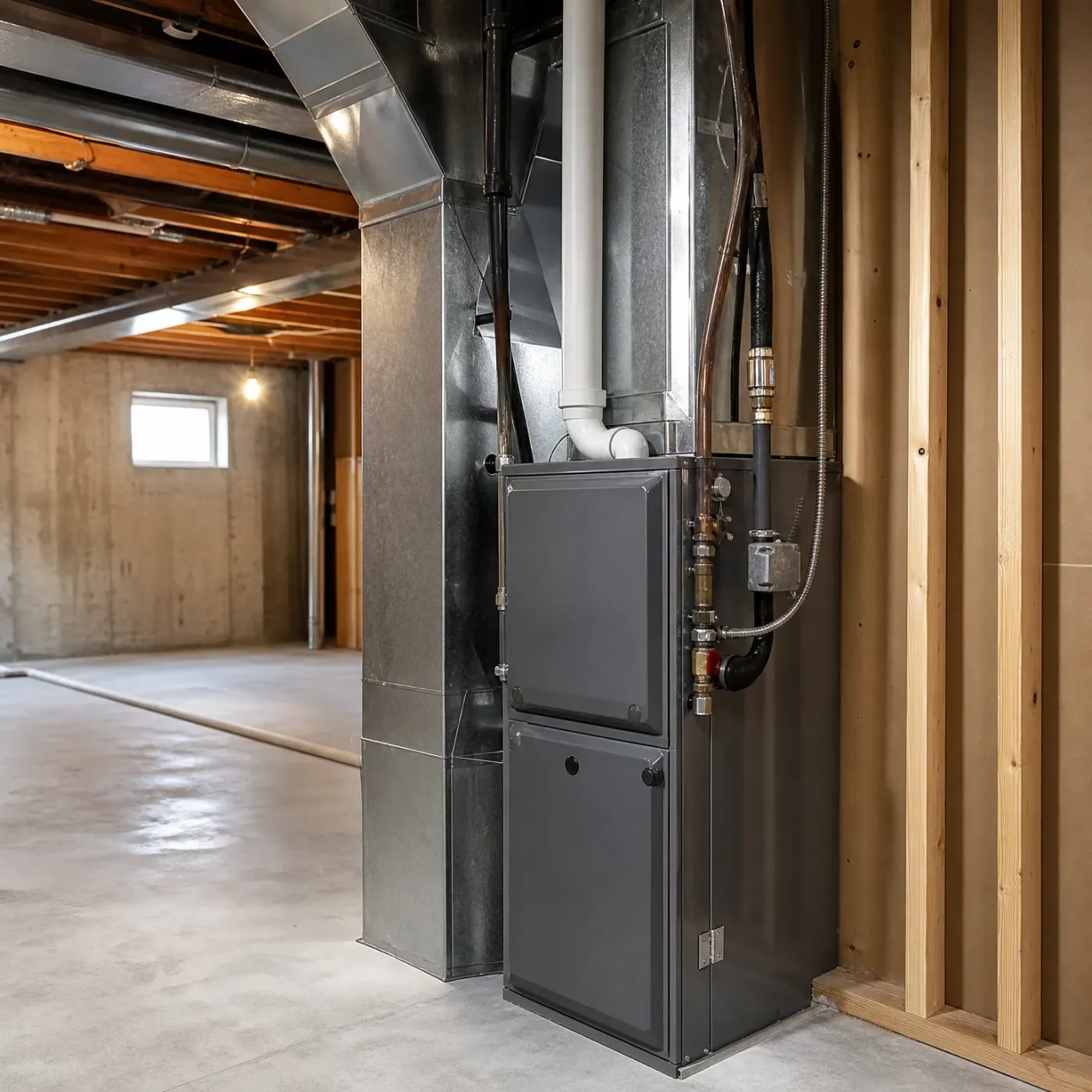
A furnace burning gas efficiently, venting through PVC and heating a tight duct system still dries the air out. That part never changes. But a unit maintained like this holds its heat exchanger and blower steady, so it isn't running any longer than it has to just to keep up.
Furnace working too hard
An older furnace with a flex connector and a basement that never stays warm has to run longer to hold the same temperature upstairs. Longer run times push more dry air through the house, and a furnace already struggling to keep up has less margin before something fails.
Humidifier or Furnace Tune-Up
Running a humidifier
A whole-house humidifier ties into the ductwork and adds moisture back as air moves through, so the dryness from the furnace gets offset at the source.
It needs its own water line and a drain, and the pad or drum inside has to be checked and cleaned so it doesn't grow mold or scale over.
Set too high, it fogs windows and leaves moisture inside your walls, which is worse than the dry air it was meant to fix.
A tech who services it can set the humidistat to match what your house actually needs as the outside temperature drops through the winter.
It only helps if the furnace behind it is running right, since a cracked heat exchanger or dirty blower changes how air moves past it.
Furnace maintenance alone
A cleaned and adjusted furnace still pulls in dry outside air and heats it without adding moisture, so the dryness itself doesn't go away.
What changes is how hard the furnace works to do it. A clean flame sensor and igniter mean it isn't short cycling and pushing even drier air through more often.
No added equipment means no extra water line, drain or pad to maintain beyond the furnace itself.
Gas and electric rates in Delaware make a furnace running longer than it needs to the costliest part of winter, and tuning it keeps that in check.
A technician who works on furnaces all winter in Delaware homes knows which parts wear first and checks them before they fail.
One request and it's handed off
A licensed local pro takes the request for your furnace tune-up.
Send the form and the furnace tune-up stops being something to remember.
A furnace running on a clean heat exchanger burns gas fully and vents it straight out through the PVC, so it heats your air without adding soot or extra moisture loss on top of what dry winter air already does.
A furnace that's gone a few winters without a look can crack its heat exchanger or clog its flue, and once that happens it burns longer and rougher to hit the same temperature, pulling in and drying out even more air.
Why the Furnace Dries the Air
Cold outside air holds very little moisture, and a furnace does nothing to replace what's missing when it heats that air.
The blower pulls return air across the heat exchanger, warms it, and pushes it straight into your ducts with no moisture added anywhere in that path.
Warm air can hold more moisture than cold air, so the same air that felt fine outside reads as drier once your furnace heats it.
A furnace set to run longer cycles pulls more of that dry outside air through the house over the course of a day.
Gas furnaces vent combustion byproducts outside through the flue, so none of the water formed in burning the gas ever reaches your living space.
A dirty flame sensor or a clogged burner can make a furnace short-cycle, which pulls in more cold air per hour than a furnace running steady, longer cycles.
Air can only hold so much moisture, and how much depends on its temperature. Cold air outside your house in a Delaware winter is already holding close to all the moisture it can. Once your furnace heats that air, its capacity for moisture jumps, but the actual water in it stays the same. Nothing gets added anywhere along the way. The blower pulls air from your rooms, pushes it across the heat exchanger, and sends it back through the ducts warmer than it left. That's the whole path, and moisture never enters it. The gas burning inside the heat exchanger does produce water vapor, but that goes out through the PVC flue with the rest of the combustion gas. It vents outside, not into your living space. How long the furnace runs matters too. A thermostat set high through a cold stretch keeps the burner firing longer, so more outside air gets cycled through, heated, and dried out over the course of a day. A furnace that's short-cycling, kicking on and off every few minutes instead of running a full cycle, does this more, not less. That kind of cycling often points to a dirty flame sensor or a burner that needs cleaning, and it means more cold air getting pulled in and dried per hour than a furnace running normal, steady cycles.
Before you get your furnace maintenanceAfter you get your furnace maintenance
1
Cold air enters the return with almost no moisture in it.
2
The blower pushes that air across the heat exchanger.
3
The heat exchanger raises the air's temperature but adds nothing to it.
4
Warmer air can hold more moisture, so its relative humidity drops further.
Winter nights average 28°F statewide
At 28°F on a winter night, the air outside is holding almost no moisture at all, and that's the air your furnace is working with. Every degree it pulls that in and heats it, the dryness inside gets worse before morning.
NOAA nClimDiv 1991-2020 county normals weighted by homes
The dryness isn't something wrong with your house. It's what a furnace does to cold air every time it runs, and in Delaware that's most days from November to March. Maintenance doesn't put moisture back, but it keeps the heat exchanger and blower working the way they're supposed to, so the furnace isn't doing more than its share. A unit that's clean and properly adjusted heats the air it's given without burning longer than it needs to. If you want the dryness itself handled, that's a humidifier's job, tied into the ductwork. But a furnace that's been looked at each fall is one less thing working against you on top of the dry air coming in from outside. That's the honest split: the furnace was never going to add moisture, and maintenance was never going to either. What it does is keep the rest of the system from making a dry winter worse.