 Get matched
What size generator runs a furnace in Delaware
Describe your furnace job, and a local pro who handles it gets in touch.
A gas furnace doesn't need much power to run. It's not heating the air with electricity, it's just moving air and firing a burner, so the blower motor and the control board are what a generator actually has to carry. That's a smaller load than most people expect when they start pricing out a generator.
But sizing it right still matters, especially here. Power in Delaware costs more than in a lot of states, so an oversized generator is money spent twice: once on the unit and again every time it runs. Too small, and it won't start the blower motor at all, which draws a hard jolt for a second or two when it kicks on. That number is specific to your furnace, not a guess you want to make.
The other thing worth knowing before you buy anything: a furnace is rarely the only thing you're trying to keep alive during an outage. If you've got a well pump, a sump pump, a refrigerator, maybe the AC for when summer gets sticky again, those all factor into what size unit makes sense for your house. A generator picked just for the furnace might leave you short when you actually need it.
This isn't a spec you look up once and forget. It depends on your furnace, your panel, and what else in the house needs to stay running when the power drops. A contractor who installs generators in your area can look at the actual furnace and the actual house and tell you the right size, not a range that might or might not fit.
Send in what you're working with and a contractor who handles generator installation nearby will follow up. From there, the sizing question stops being something you have to figure out on your own.
A gas furnace in Delaware will run on a generator rated for about 5,000 to 7,500 running watts. That covers the blower motor's startup draw, which spikes higher for a second or two than it pulls once running, plus the igniter and control board. A furnace with an older-style inducer motor or a larger blower will sit at the top of that range, so check the nameplate on the unit or the data tag inside the panel for its actual amperage before buying or renting anything smaller. Most standby and portable generators sized for a whole house cover this with room to spare, since the furnace is a small part of what they're built to carry. The bigger reason to size this right is the cold itself: a January outage without heat gets dangerous fast, especially for anyone older or very young at home. Getting the generator sized and installed before that happens is what keeps the house livable when the power goes out.
Winter nights average 28°F statewide
A 28°F night means that furnace is cycling on and off most of the night to hold the house steady. If the power drops during one of those cycles, a generator sized for the startup draw is what gets the blower moving again before the house cools off.
NOAA nClimDiv 1991-2020 county normals weighted by homes
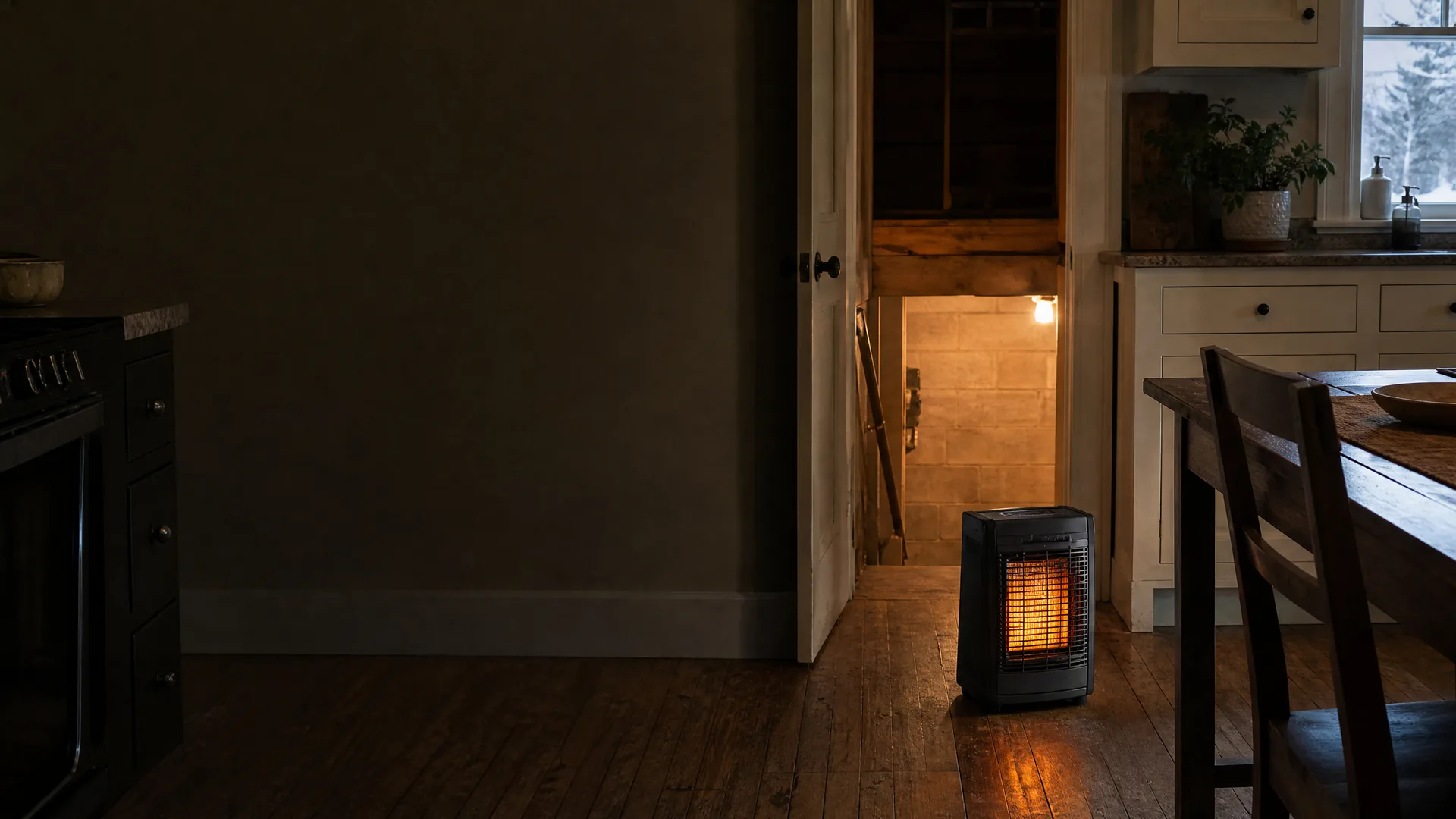
It's just past six and still dark outside. You're standing in the kitchen in your socks, coffee not even started yet, because the power's been out since some time after midnight. The space heater is doing what it can, humming orange by the table, but it only reaches so far. Behind it the basement door sits open, the way you left it after checking the furnace for the third time. Nothing down there. No fan, no flame, just the cold coming up the stairs. The thermostat read 58 the last time you looked. Somewhere out back, if you had it, a generator sized right would already have that blower turning again.
A local pro for your furnace installation
A furnace that won't start because the power's out isn't a furnace problem. It's a generator problem, and in Delaware the fix is sizing one right and getting it wired in before the next outage, not during it. Winter outages here don't announce themselves. Ice on the lines, wind off the bay, a transformer that's had enough. Once that happens, every gas furnace in the county that was running fine an hour ago is dark, and the ones with a properly sized generator and a transfer switch are the only ones that come back on without anyone touching a breaker. That's the difference between a cold house you're managing by hand and a house that handles itself. You already know what your furnace needs to draw. What's left is matching that to a generator and an installer who can get it set up correctly, before the next cold night decides it for you.

A generator sized right just runs the furnace, no thinking required
A generator in the 5,000 to 7,500 running watt range covers the blower motor, the igniter, and the control board, with room for the startup spike. That's the number for a gas furnace in Delaware. Get the sizing right and the transfer switch wired in ahead of time, and the furnace just comes back on when the power does. No manual restart, no running a cord through a window, no standing in the kitchen waiting to see if the blower catches.
Getting the right size installed, and installed correctly, is a job for someone who's done it before. Once that request goes in, the work of tracking down who's available and who's qualified isn't yours to do anymore. A contractor who handles this kind of installation in Delaware gets in touch, and the sizing, the wiring, the permit questions, all of it moves to their side of the table.


Furnace Installation
Get the right pro for your furnace

- A local pro who knows furnaces gets your details and gets in touch.
- Get in touch with a local installer about a new furnace.

- Send the form and the search for an installer is over.
- Send the request and finding a pro stops being your problem.

- Answer a few questions instead of calling shop after shop.
- Describe your furnace job once, to one pro.

- Your request goes to one pro, not a list of companies.
- One installer gets your project, so there's no bidding war over it.